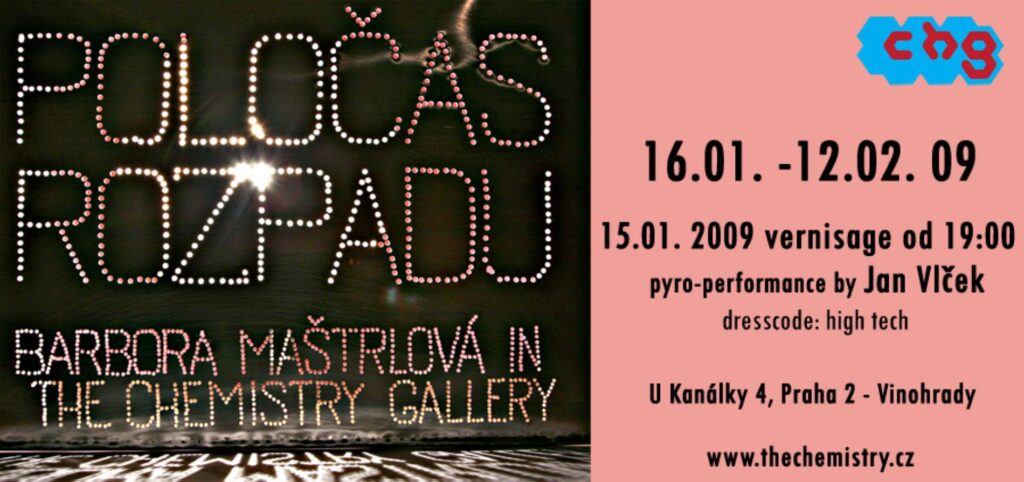
My exhibition Half-Life was my very first solo show, held in the January of 2009 in Vinohrady at what was then the very first stage of The Chemistry Gallery in its debut year.
The main theme of my exhibition Half-Life was childhood. I explored the contrast between the way we often idealize childhood and the reality that these visions often fail to materialize. I did not search for the reasons in any particular individual, nor did I attempt a critical probe into the structure of society, which would be all too easy to blame for creating unattainable ideals.
I aimed to tell a story – an abstract, visual narrative built through three installation pieces whose central motifs are artificialized symbols of childhood.
A story told through three installations
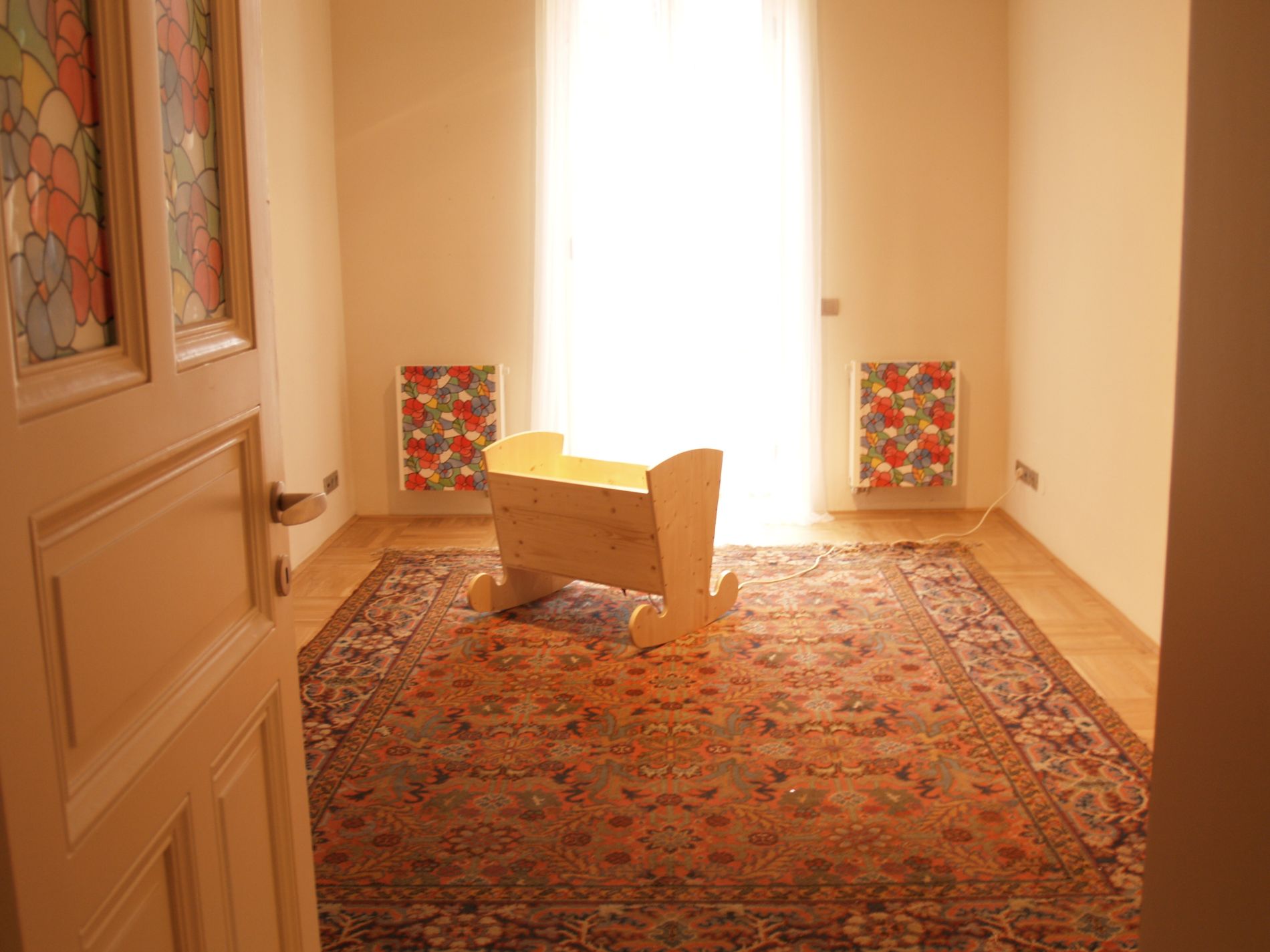
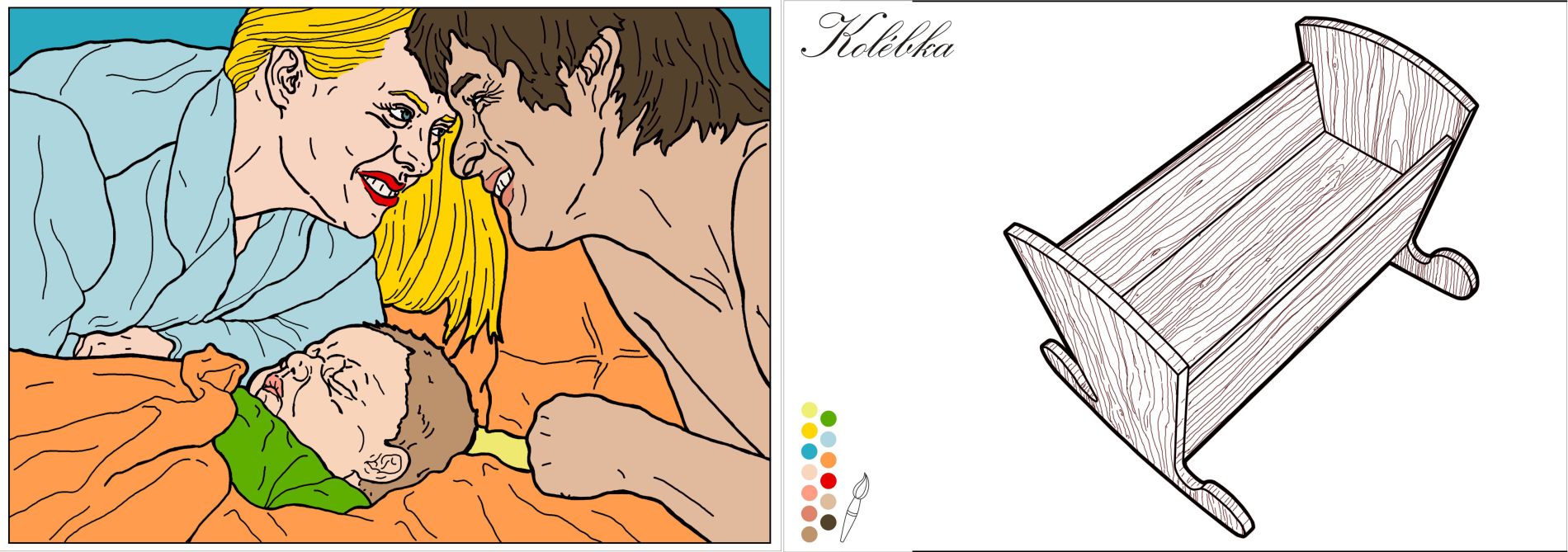
The viewer first enters a carpeted room where an empty cradle, powered by electricity, rocks gently. There is no mother to cradle a child, no child to be cradled, and the air is slightly stale.
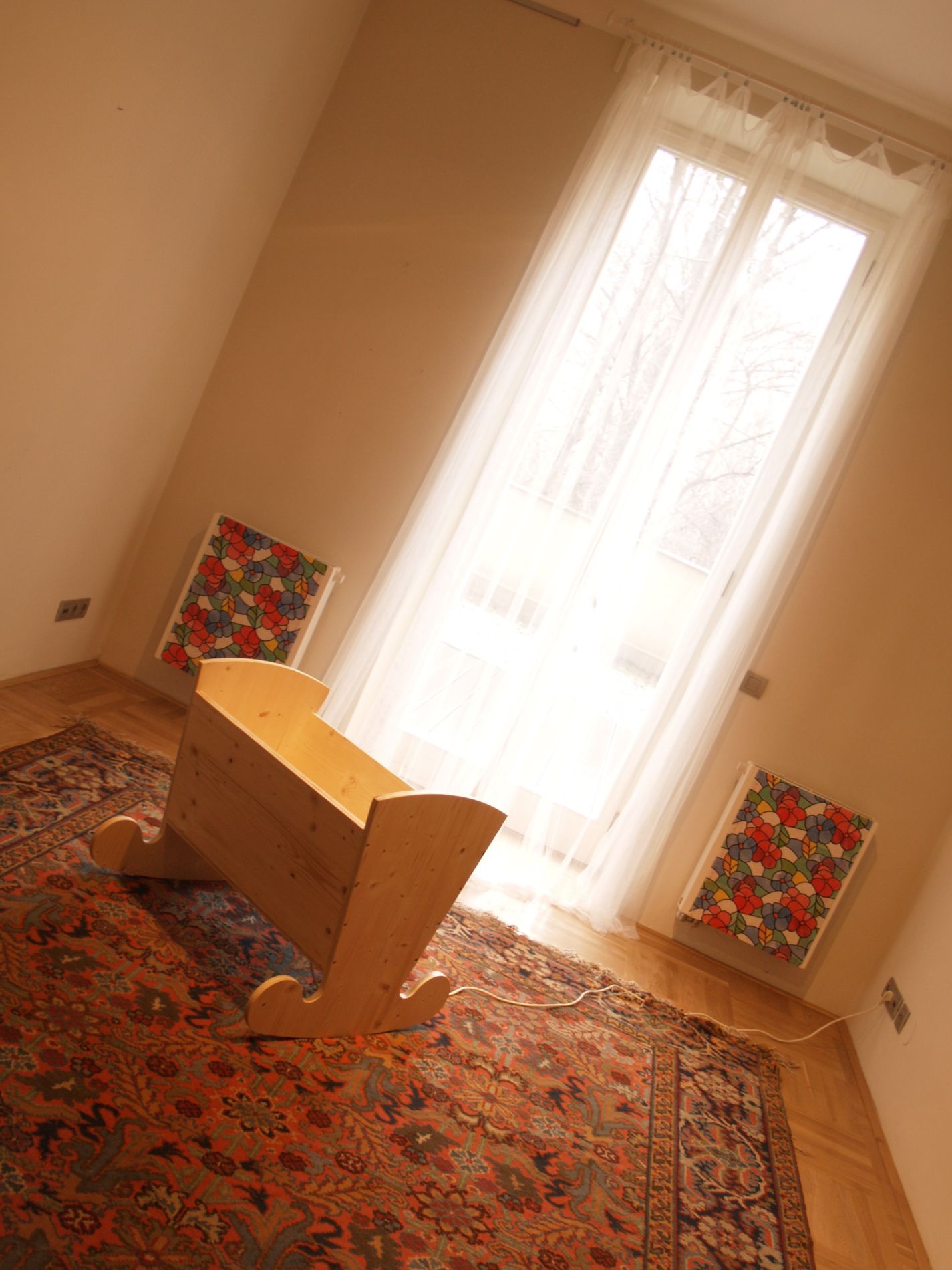
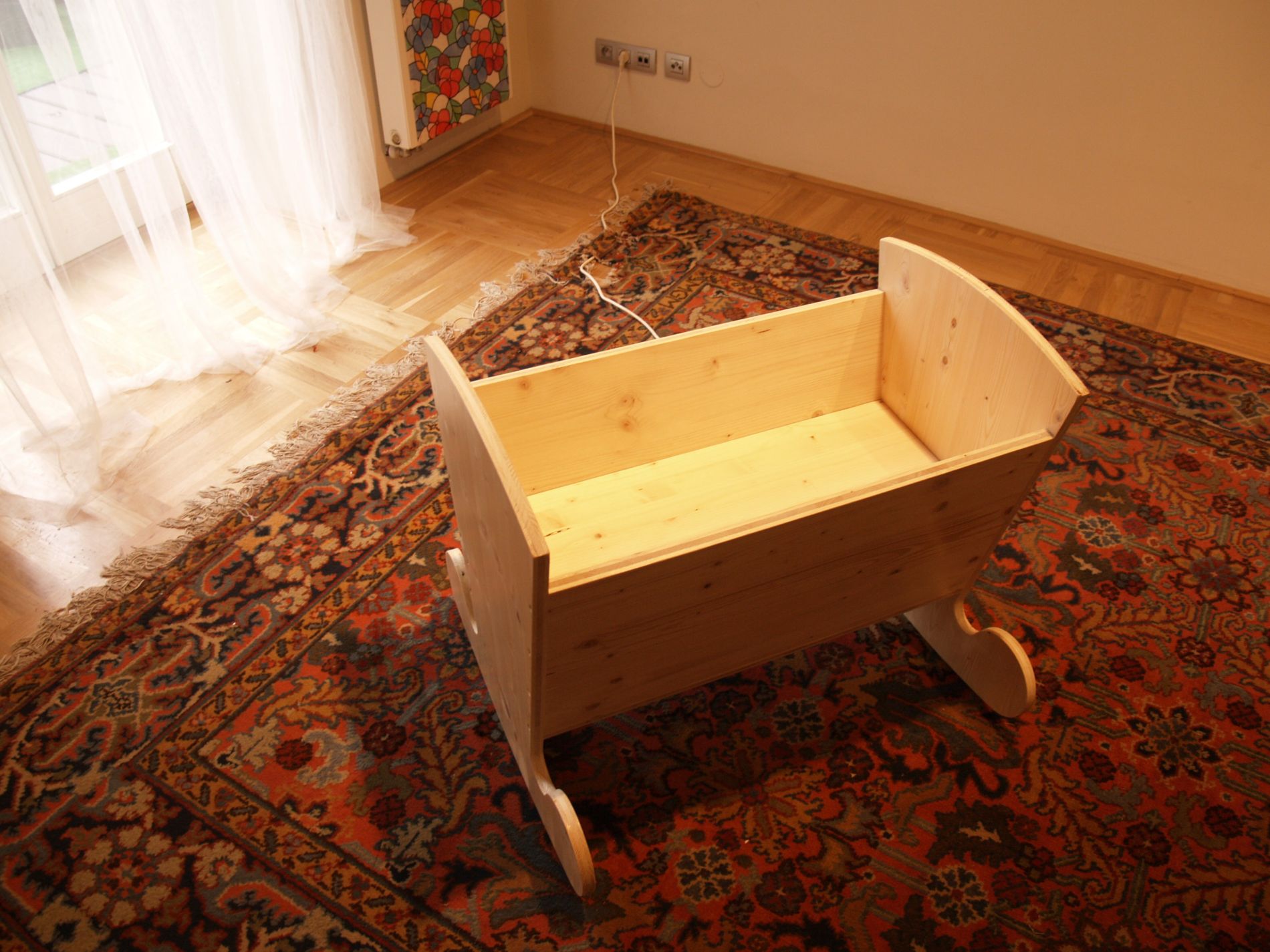
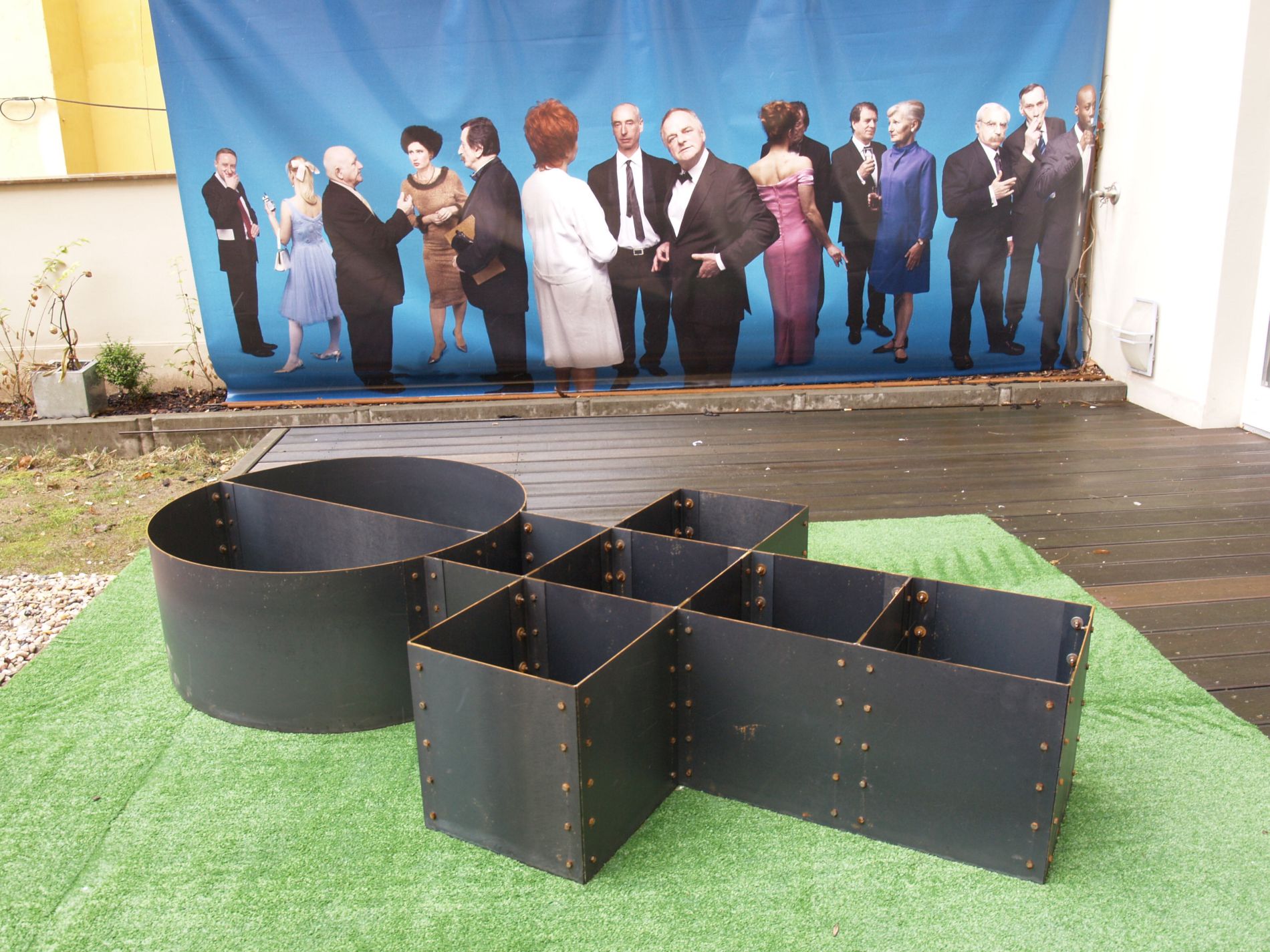
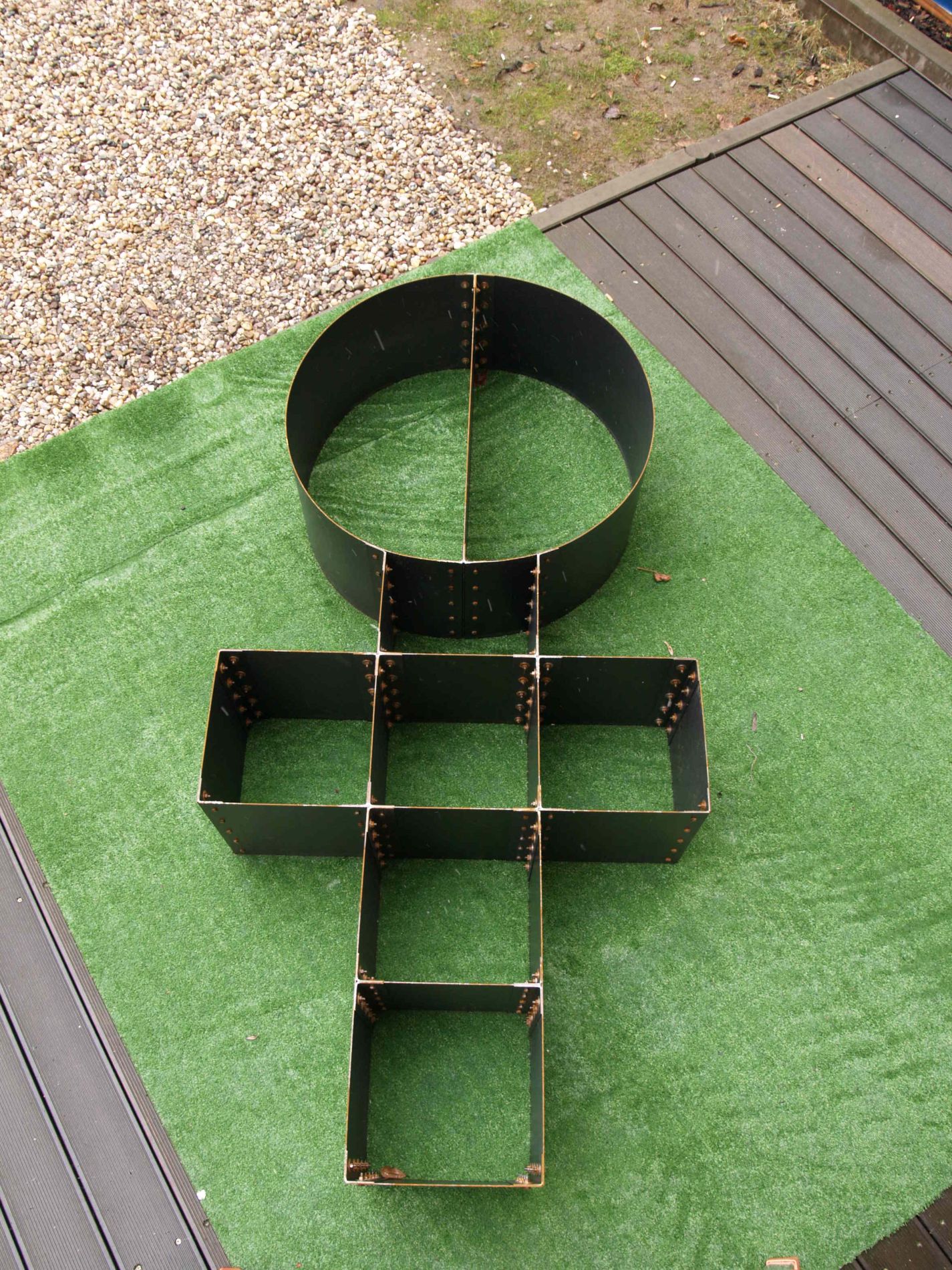
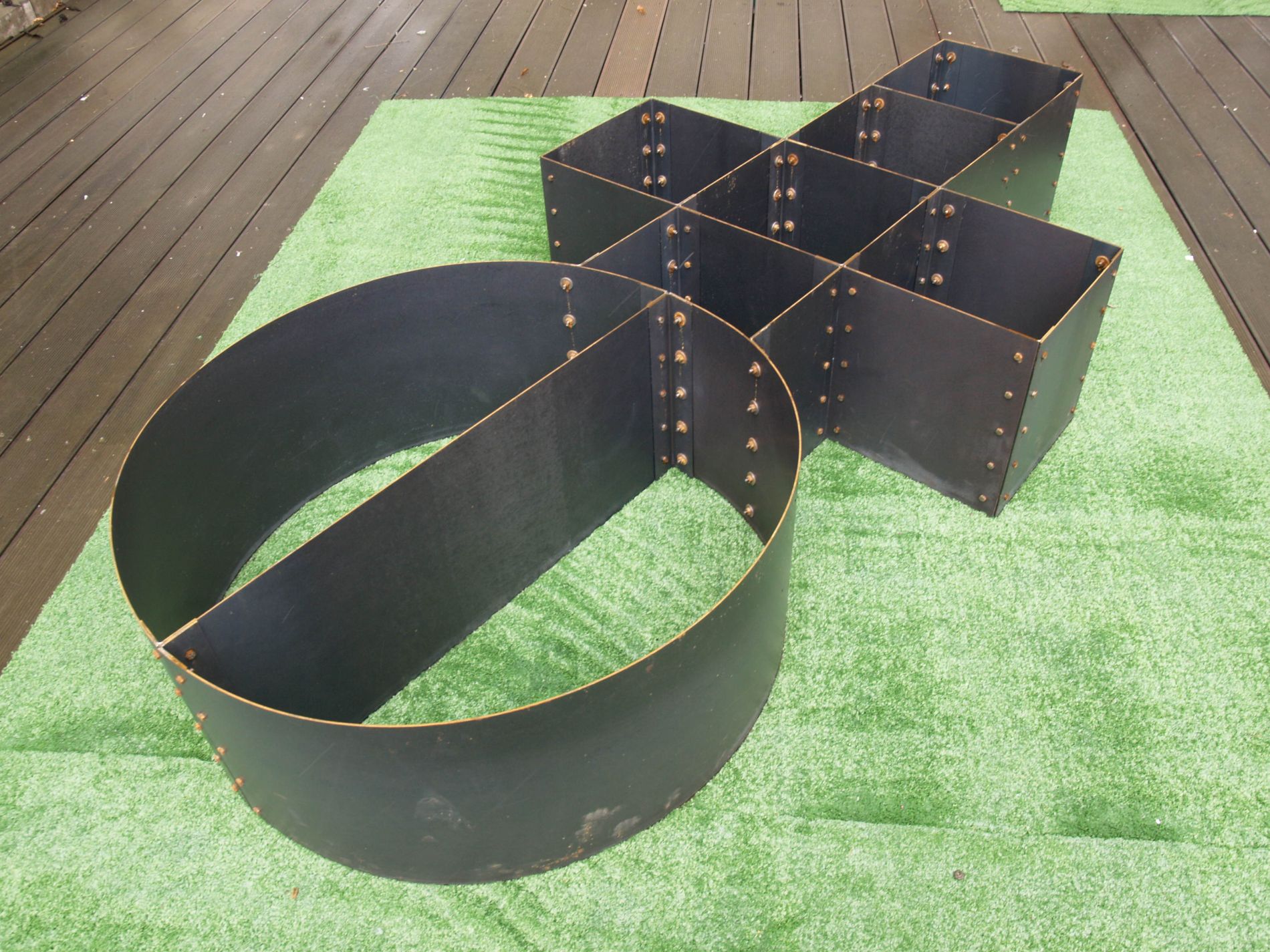
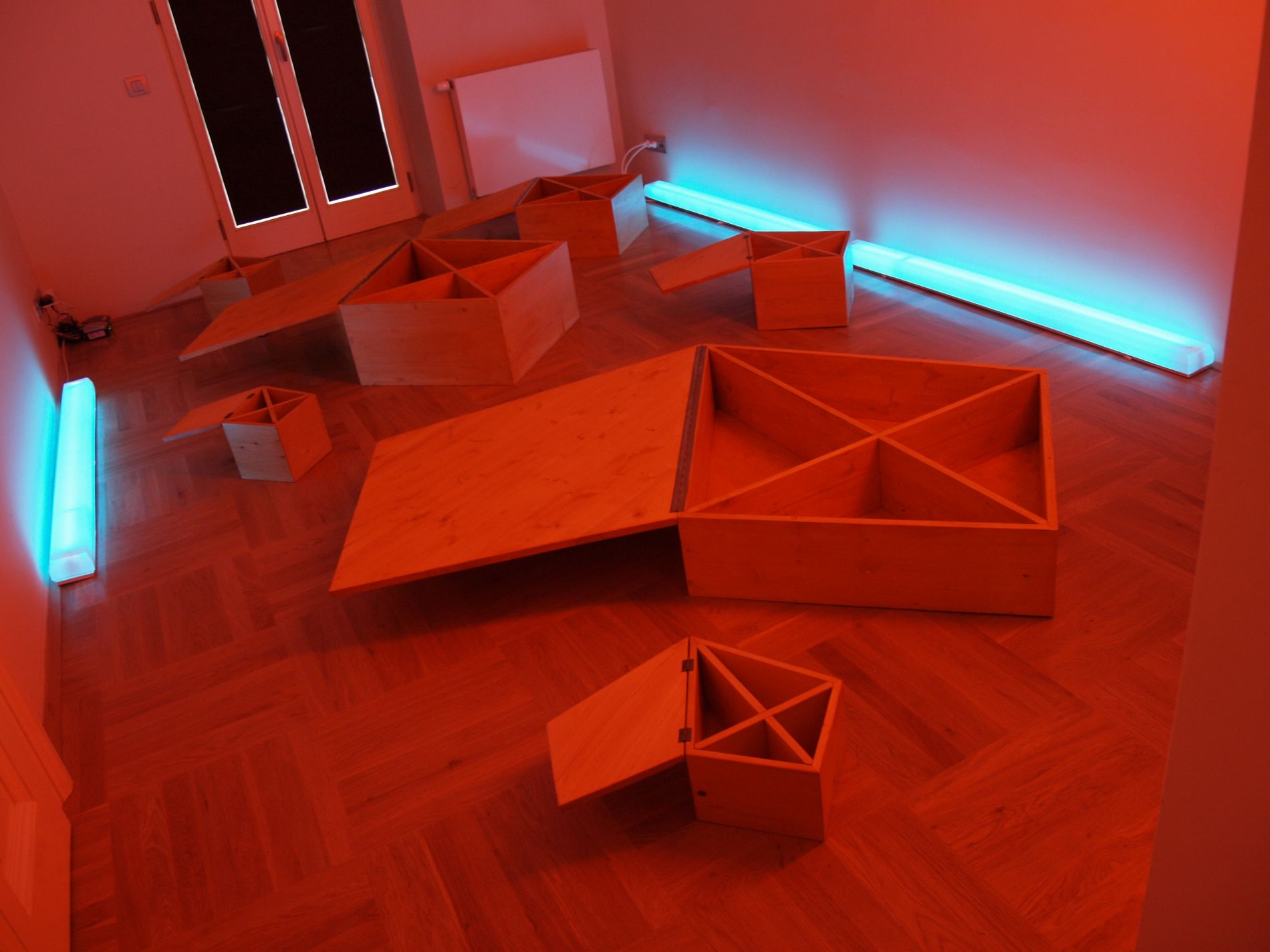
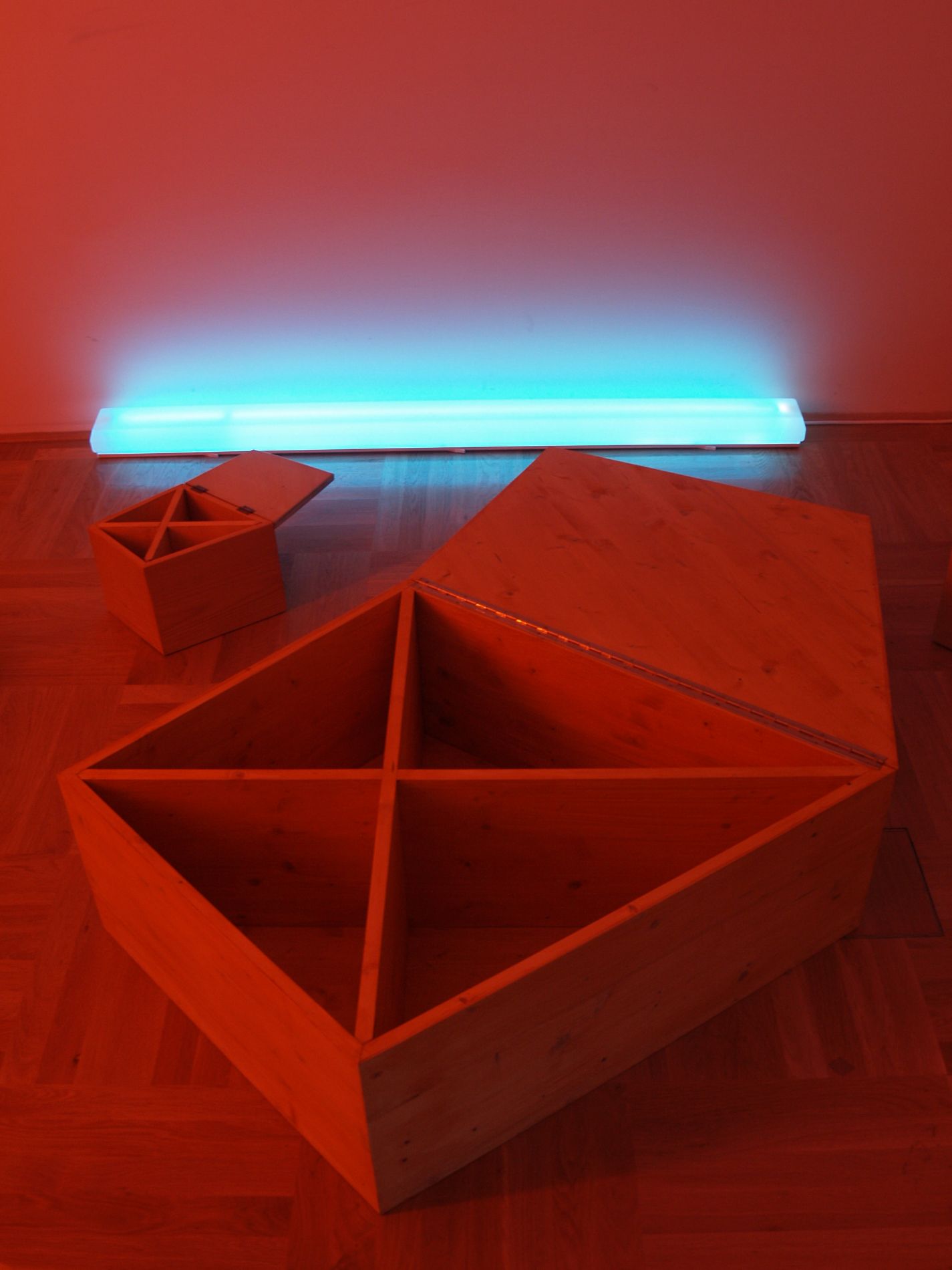
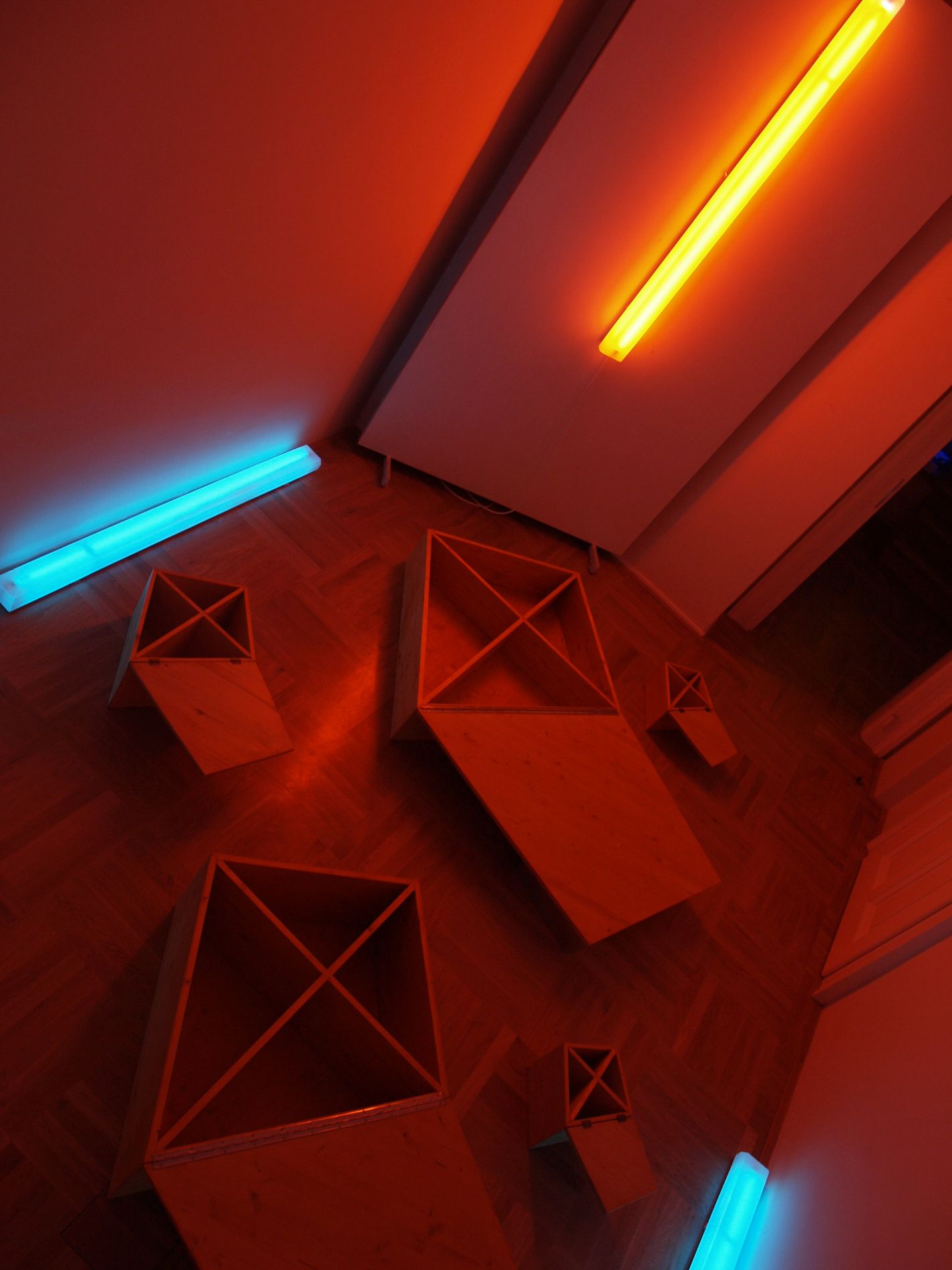
Next comes a yard, where a metal hopscotch figure lies on artificial grass. It cannot be played on – attempting to jump it would likely result in a broken leg or worse. At best, one could awkwardly walk across it. Who would want to play with it?
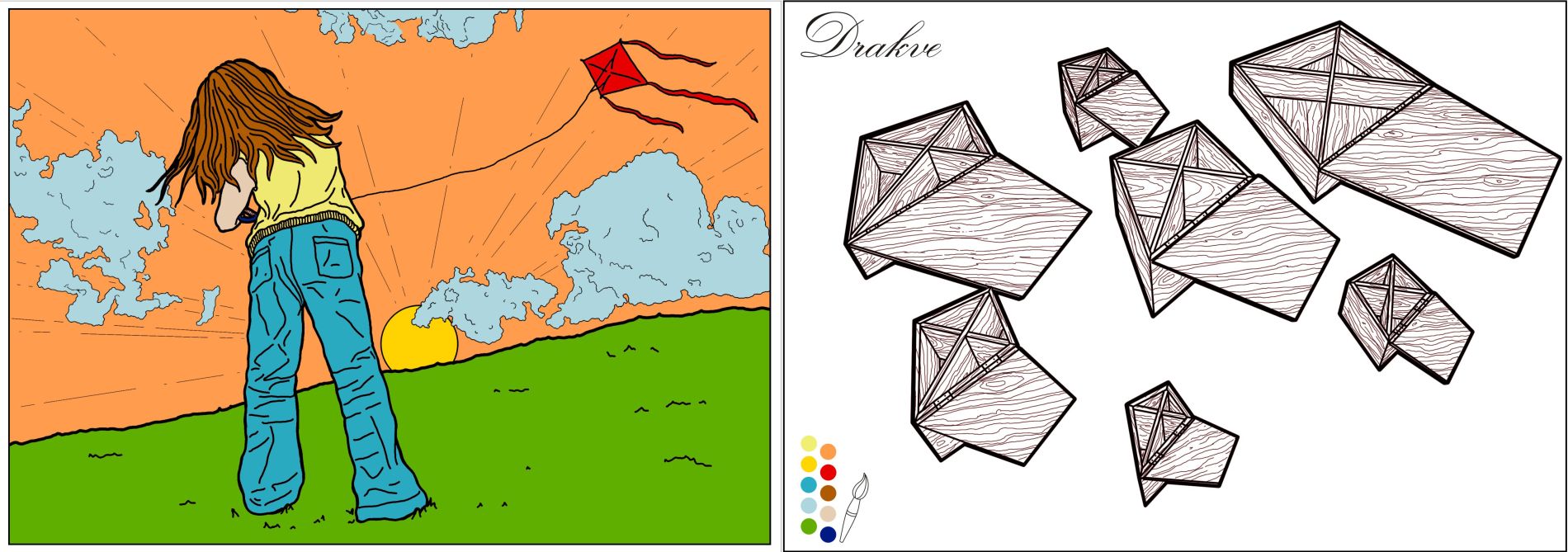
From the yard, the viewer moved into a room filled with Kite Coffins – fallen paper kites resting in wooden coffins, at peace. You will never take them to fly on a hill outside the city again, because for these pleasant visions, death is final.
The idealized archetypes of these scenes are easy to find in our own lives and memories – whether they came true or whether something “broke” along the way and life did not unfold in the beautiful form we had wished for. For me, the essence of this story is not regret over “spilled milk,” but rather an acknowledgment that it is precisely the tension between the ideal and reality that enriches our lives, even if sometimes bitterly and painfully.
The Catalogue as a fourth piece of exhibition
I conceived the exhibition catalogue as a fourth, stand-alone work – a coloring book. Visitors could take it home and try to color the harsh reality of unfulfilled beauty with the shades of idealized visions. This process could help them “touch” the trauma of a shifted starting line for those not born into optimal circumstances.

It was a great opportunity to realize my vision of the story in a way that was comprehensive, unobstructed, and tailored to the specific location of the ground floor apartment in Vinohrady. Thank you Petr Hájek for inviting me to be part of the gallery’s beginnings and for believing in my concept.